Three Small Stir-Fry Experiments to Build a Reliable Weeknight Technique
Stir-frying is a fast, flexible weeknight skill, but small mistakes—wrong heat, crowded pan, or a watery finish—turn it from crisp and vibrant to bland and soggy. Treat the stove like a lab: run three tiny experiments, learn one variable at a time, and combine the results into a reliable routine.
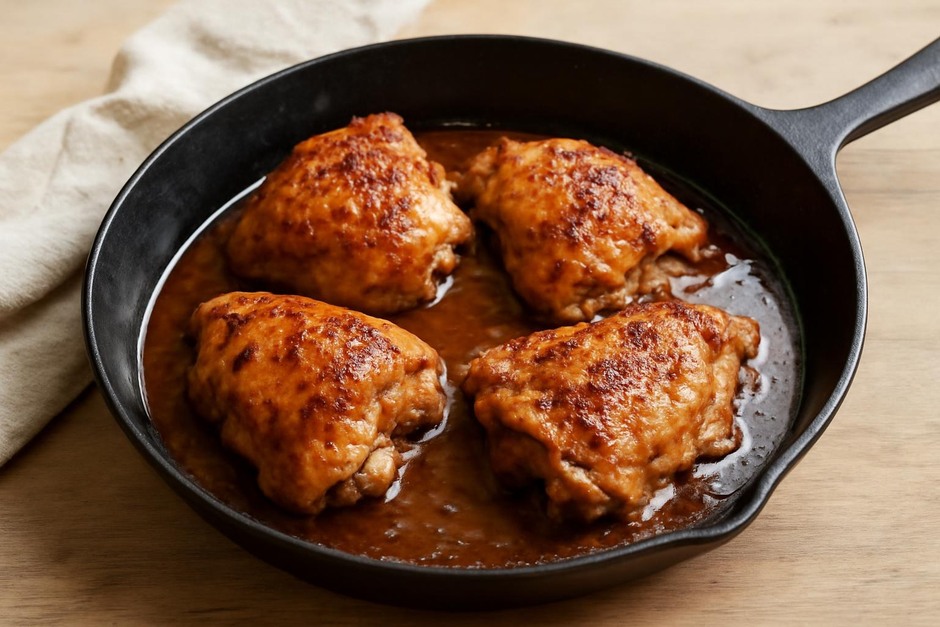
Experiment 1: Heat and Sear (Protein or Firm Veg)
Goal: Learn how hot your pan needs to be to get a quick, even sear without sticking.
- Choose one ingredient to test: a single portion of thinly sliced chicken breast, firm tofu, or thick-cut mushroom caps.
- Pat the piece dry. Heat a wide skillet or wok over medium-high for 2 minutes. Add 1 tablespoon neutral oil and let it shimmer but not smoke.
- Place the piece in the pan and do not move it for 90 seconds. Check for a golden-brown crust, then flip and cook 30–90 seconds more until done.
Common mistakes:
- Pan too cool: Ingredient glues to the surface and releases liquid—then it steams instead of sears. Correction: raise the heat a notch and re-test.
- Added too much oil: Oil can pool and carry heat away. Correction: use a thin shimmer, not a puddle.
- Ingredient wet: Moisture prevents browning. Correction: pat very dry before cooking.
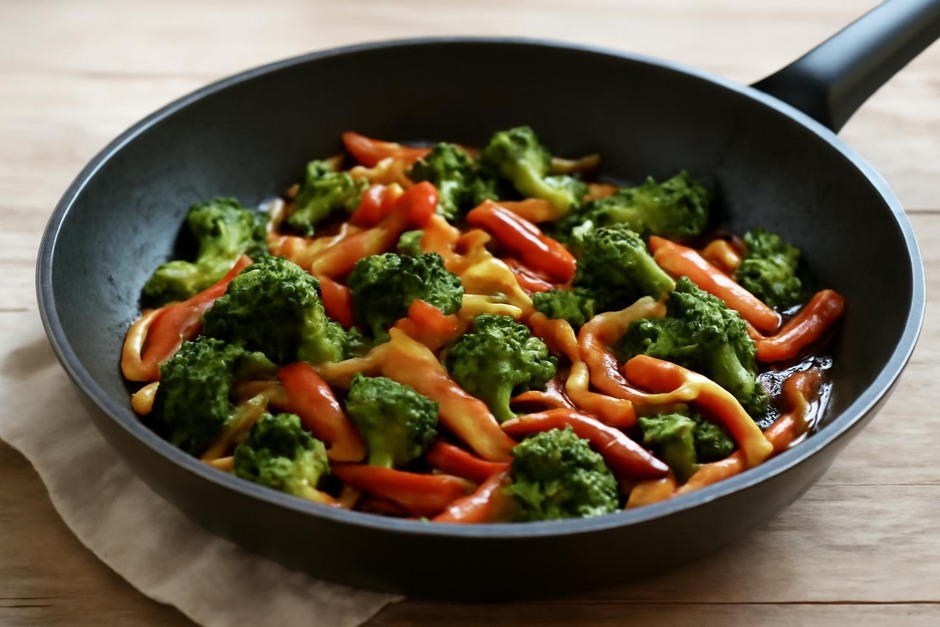
Experiment 2: High Heat, Small Batches (Vegetables)
Goal: Understand how crowding and cut size affect texture.
- Pick a single vegetable: bell pepper, broccoli florets, or sliced carrot. Cut half into small, uniform pieces (about 1/2-inch) and leave the other half larger.
- Heat the pan as in Experiment 1. Test cooking a small batch in one go and then a larger batch pushed together in the pan.
- Watch how each batch behaves: does it brown and stay crisp, or release liquid and steam?
Common mistakes:
- Crowding: Too many pieces drop the pan temperature and cause steaming. Correction: cook in small batches and keep cooked pieces warm at the side of the stove or a low oven.
- Mismatched cut sizes: Smaller pieces cook much faster than large ones. Correction: cut uniformly or add items in stages, starting with the slowest-cooking pieces.
- Wrong oil: Low-smoke-point oils can burn on high heat. Correction: use neutral oils (canola, sunflower, refined olive) or a small amount of sesame for flavor added late.
Experiment 3: Sauce Finish and Thickening
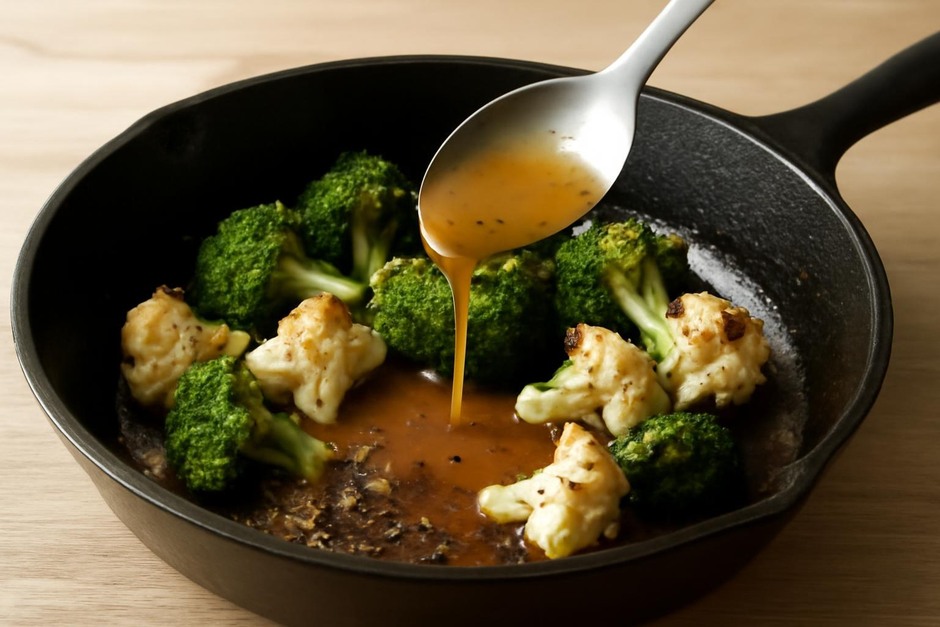
Goal: Make a glossy, clingy sauce that coats ingredients without watering them down.
- Mix a small sauce: 2 tablespoons soy sauce, 1 tablespoon rice vinegar or lemon, 1 teaspoon sugar or honey, and 1/4 cup stock or water. Split this into two bowls.
- After your protein and veg are cooked and resting, increase the heat to medium-high, add 1–2 tablespoons of the liquid (no more) to the hot pan to deglaze and capture any browned bits.
- To one bowl of sauce add 1 teaspoon cornstarch mixed into 1 tablespoon cold water (slurry); leave the other plain. Pour the plain sauce into the pan and let it reduce 30–60 seconds, then try the slurry version and observe the difference.
Common mistakes:
- Adding too much liquid: Flooding the pan cools it and thins the sauce. Correction: use small amounts and reduce quickly on higher heat.
- Not pre-mixing starch: Sprinkling cornstarch straight into hot liquid causes lumps. Correction: always make a slurry first and stir it in off-heat if possible.
- Overcooking the starch-thickened sauce: Prolonged boiling can thin it back out. Correction: remove from heat once glossy and translucent.
Putting It Together: A Short Checklist for a Weeknight Stir-Fry
- Prep everything first: cut uniform pieces, measure sauce, and have a place to rest cooked items.
- Heat the pan until oil shimmers. Test with Experiment 1 habits before adding ingredients.
- Cook protein or firm veg in a single layer to brown, then remove.
- Cook vegetables in small batches, starting with the slowest items.
- Finish by returning everything to the pan, deglazing with a tablespoon or two of liquid, adding the sauce, and thickening with a slurry if needed.
- Taste and adjust: a squeeze of acid, a pinch of salt, or a drizzle of toasted sesame oil will sharpen a safe, simple dinner.
Run these experiments once or twice and you’ll start recognizing the signs of a pan that’s too cool, a crowding mistake, or a watery finish. Small, focused tests replace guesswork, and the next weeknight stir-fry will feel more like a routine and less like a fire drill.